Photo source: Yakubu Samaila
The gruesome reality of humanity is staggering in today’s world. We have spiralled into a cycle of fear, where, if we allow ourselves to sit in the chaos long enough, the idea that the end of humanity is near no longer feels abstract.
In recent news, the United States, in President Donald Trump’s words, launched “numerous perfect strikes ” against ISIS terrorists in Northwest Nigeria on December 25, 2025. While the narrative from the American side is to combat the radical Islamic terrorism threat against Christians in the region, in contrast, the Nigerian government takes a stance towards the battle against terrorism.
Imagine a reality where death is as tangible as the truth that life can be drained in a snap. To say, “I stood there a day after the attack, bodies still being discovered; people who tried to flee but didn’t make it,” is as eerie as it is imminent, because that body could very well be yours tomorrow. This is the reality and experience of Nigerian humanitarian activist, Yakubu Samaila.
The reality of Islamic terrorism and Nigeria’s defence
For many, until the recent U.S. strike in Northern Nigeria, the insecurity and constant threat faced by communities in the region were little more than distant chatter. The severity of active terrorism was scarcely grasped. Many civilians believe even the Nigerian government has long downplayed the situation, perhaps because the reality is far more complex than it appears.
Here are the facts: while the world celebrated Christmas, Sokoto, one of Nigeria’s 36 states, was targeted by U.S. strikes. Aimed at the ISIS-affiliated group, the Islamic State West Africa Province (ISWAP), the region had already endured repeated abductions and sustained violence.
In response to Donald Trump’s confirmation post on the Truth Social platform about the strike in Sokoto, northern Nigeria, the Minister of Foreign Affairs, Yusuf Tuggar, emphasised the collaborative nature of the operation, stating, “Terrorists have been targeted. The Tinubu Administration’s fight against terrorism was coordinated with the US. This is not about religion; it is about protecting innocent Nigerian civilians and the wider region, even before the strike.” He added that President Tinubu had authorised the operation beforehand, stressing, “We do not see it as violating our sovereignty or territorial integrity. This is not about religion; it is about protecting the lives and property of Nigerians and our neighbours.”
The state of the religious crisis versus the democracy of humanity in Northwest Nigeria
The Harvest Africa spoke with Yakubu Samaila, a native of Northern Nigeria, himself once a street child rescued by missionaries. His account speaks from within the gruesome reality of his region, where, just weeks ago, over 400 school-age girls were abducted by terrorists; a church was attacked and around 40 women taken; and shortly after, another school was raided, with more than 100 girls abducted.
Eyewitness testimony, including that of Yakubu Samaila, paints a terrifying picture. “On one hand,” he explains, “we’re dealing with bandits, what I would describe as economic terrorists. They kidnap people for ransom, targeting both Christians and Muslims. Religion doesn’t matter to them.”
Simultaneously, Boko Haram and the ISWAP pursue a far more explicit mission: to expand and impose Islamic rule under Sharia governance. Their agenda is specific, and anyone who stands in the way is eliminated, Christians bearing the brunt of these atrocities. In regions where Sharia is practised, Christian minorities are marginalised and persecuted. Churches have been attacked.
At this juncture, Northern Nigeria faces two distinct yet overlapping threats: one driven by money and survival, the other by extremist ideology. Whether cloaked in religious rhetoric or economic desperation, the motives point unmistakably toward political and religious domination, territorial control, and power.
What, then, becomes legitimate defence for the right to life, when protection itself can no longer be guaranteed by law, and non-lawful responses emerge as the only means of survival?
The twofold rift of Nigeria’s security crisis in West Africa’s imperial context
Against the backdrop of rising geopolitical tension, following the formation of the Alliance of Sahel States (AES), the exit of three Sahel nations, Mali, Burkina Faso, and Niger, from the Economic Community of West African States (ECOWAS). Including the nationalisation of resources and the withdrawal of French military forces in countries including Chad, Côte d’Ivoire, and Senegal, questions of imperial interest loom large. Nigeria, which hosts the ECOWAS, now draws scrutiny for its alliance with the United States in countering Islamic militant threats. Whether through intelligence or arms, there is always an exchange.
Yet amid debates over imperial power, natural resources, and religious fault lines in West Africa, the central argument remains unchanged. At its core lies humanity. The preservation of life. A turning point between what is deemed necessary to save lives and the unresolved weight of Africa’s neo-colonial inheritance.
The overarching effect of terrorism in North West Nigeria is insecurity. As Samaila explains, “There are places I simply cannot travel to right now. It would almost be a suicide mission. You could be kidnapped by bandits or intercepted by ISIS-affiliated groups. Travelling from Jos to Benue State, for instance, means placing your life in your own hands.”
Amid this turmoil, where war and grief reside, where families and communities are lost, and where the question of a future lingers, hope becomes a faint thread glimmering in the surrounding darkness. And where hope thins, the most vulnerable collapse first: children, youth, and women. Nigeria is a young nation. The median age is 18.1 years, with 58% of the population under 30. Yet Afrobarometer reports that almost a quarter of youth aged 18–35 are unemployed and actively seeking work.
Beyond unemployment, the persistent presence of terror strips many women and youth of access to psychosocial support. Samaila has witnessed this firsthand: “I’ve met women who lost their entire families and are the only survivors. I’ve met children who lost both parents and are now alone.” He adds, “There are moments when no words bring comfort. Even from a religious perspective, what kind of prayer comforts someone who has lost everyone?”
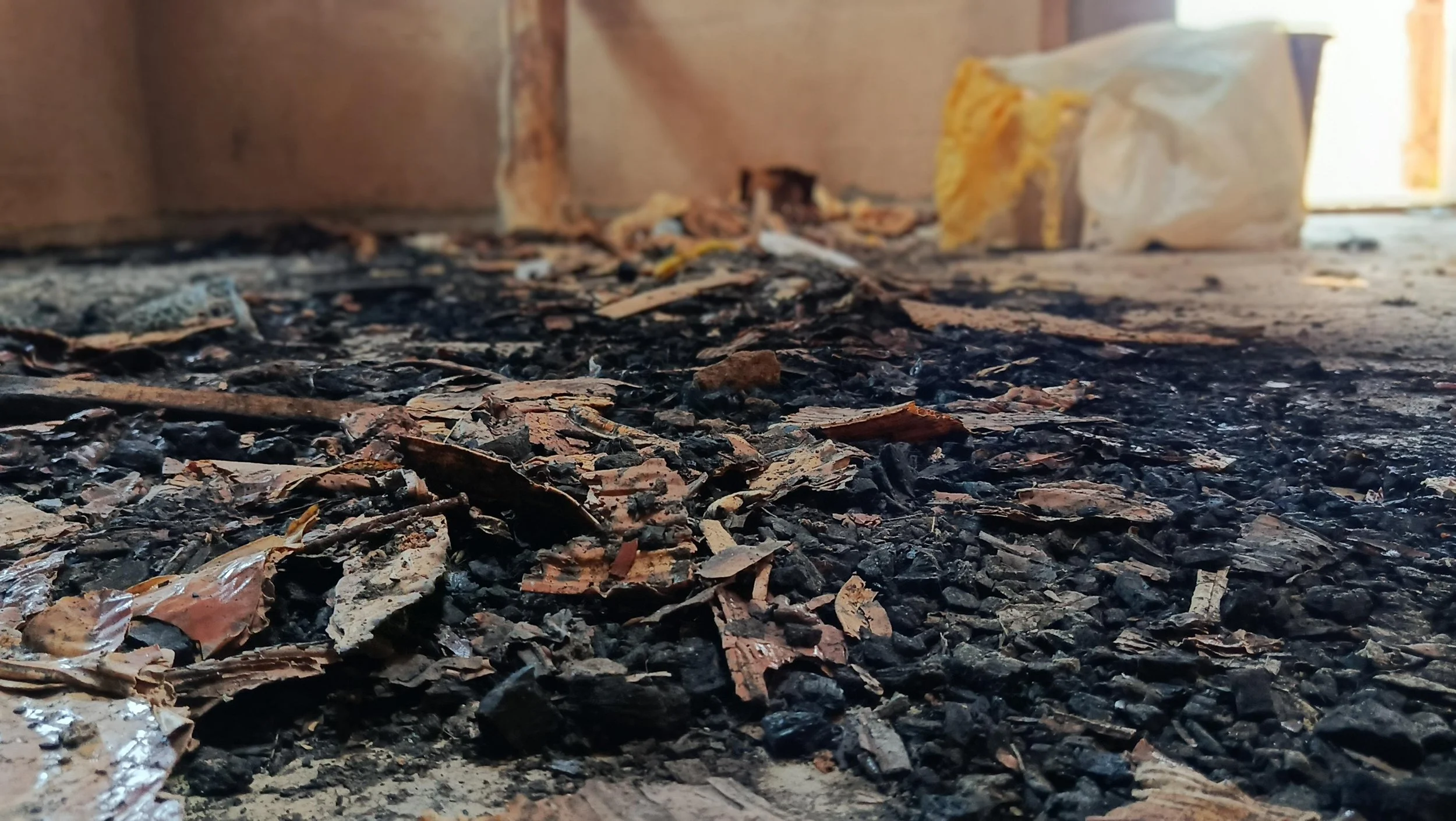
For far too long, entire communities in this region have been burned down. Many cannot return and now live in internally displaced persons (IDP) camps, or as refugees in their own country. Yet despite its fragility, hope persists. The resilience of Nigerians is evident, and where religion remains one of the few constants, it becomes a space people cling to for comfort and meaning.
The potential of education to reignite the hope of Nigeria’s vulnerable population
The contrast between what is and what could be for Nigeria’s youth is reflected in Yakubu Samaila’s own story. “As a young boy,” he recalls, “I had no dreams. My biggest dream was simply to have three meals a day.” His words point to a critical truth: any long-term response to terrorism, especially for children, must be rooted in nurturing their potential.
Humanitarian support, though necessary and often risky, can only go so far. What many children and young people long for is access to education without the fear of abduction, and the freedom to attend church without the threat of attack. The desperation is tangible. The government must confront these realities with strategies that address the root causes, not just the violence.
It is indeed true that Africa’s children and youth carry immense potential. When invested in and protected, survival can shift from mere endurance toward transformation. In conflict zones, where vulnerability is a constant presence, education becomes an act of resistance. Children growing up exposed and unprotected become highly susceptible to recruitment into terrorism and criminal activity. As Samaila echoes, “When the mind isn’t shaped through education, especially healthy, critical education, it becomes easy to manipulate people into extremism.”
As national and international actors rush to shut down terrorism through force, a more strategic approach is needed. A strategy that protects vulnerable lives. Our language for change must move away from systems of war and return to humanity: imparting knowledge, courage, and care, even among those whose potential remains threatened and unrealised.